Rigid fibreglass is great stuff and you can cover it with any acoustically transparent cloth, from burlap to speaker cloth. Rockwool is also a great absorber. The thicker the better and the more you can space it away from a surface the lower the frequencies it can absorb. Often you would build them into a simple wooden frame that automatically spaces them away from the wall a couple of inches. Dozens of designs and construction details
linked from here and here.
If you want to go the professional route, the Auralex stuff can be very attractive, and is available in a range of colours and styles (expensive though):


The older style tiles like the ones on Gumtree are more than a little ugly - I have boxes full of them in my garage that I'll probably never use. Also from the pic, the guy seems to have the 1" thick tiles, while you would need a mix of 1", 2" and 4".
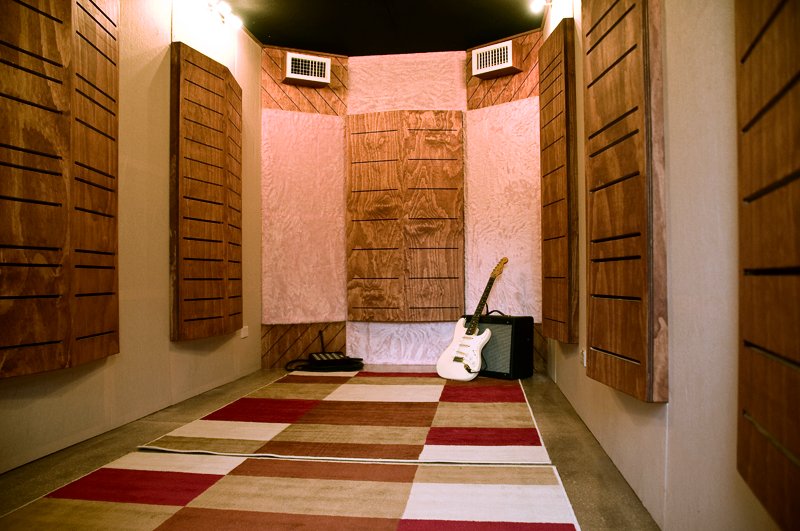
BTW, don't just look at absorption, look at a combination of absorption and diffusion (scattering the sound randomly). Things like display shelving (not cabinets) and bookshelves are wonderful natural diffusors. You can also build slot resonators from wood and mount them on the walls, which can be made very attractive, but takes a bit of theory and room analysis to design correctly. Pic: