lindsmuse wrote
Classical music amazes me the way it endures. And today our musicians create music that comes and goes and is forgotten. But if we imagine that somewhere in the future there will be some of the music we loved from say 1950 till now - what do you think will survive. Maybe it'll be compilations of the best music, synthesized and packaged with visuals - maybe music is going to become more visual? I reckon some of the rock hymns like - 'Stairway to Heaven' might make it thro'! Little Richard! Hendrix. Who knows ...
Classical music is a Johnny-come-lately!
Here's a true story. Late in 1999 Playboy Magazine decided to run a set of features on the best [fill in the blank] of the millenium. One of these was the best SONGS of the last 1000 years. They asked various people to submit their lists. One of the people they asked was that perpetual critic's favourite Richard Thompson.
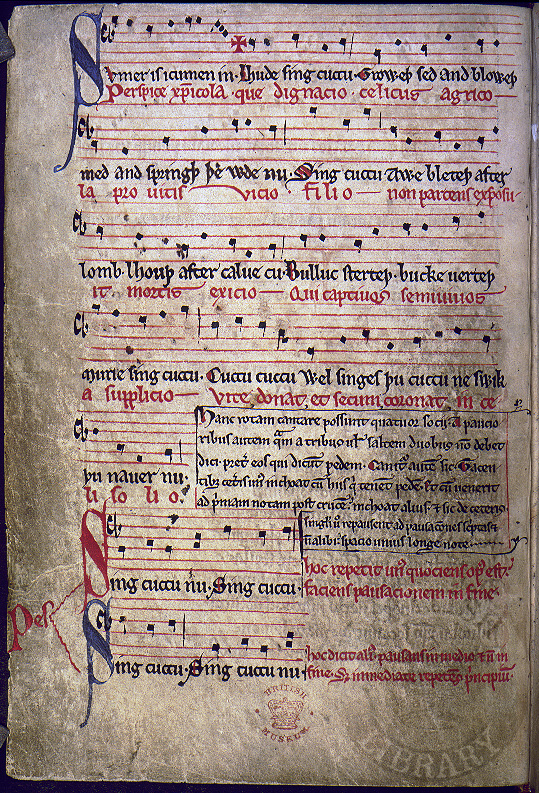
Thompson figured they probably didn't really want anything prior to Frank Sinatra, but took the task at face value and submitted a list that started with the one of the oldest surviving songs in anything approaching English - "Sumer Is Icumen In". This dates back to the 13th century (or maybe earlier - the oldest surviving transcription was written down in the 13th century) and is in what historians now call "Middle English".
"Sumer is icumen in,
Lhude sing cuccu!
Groweth sed and bloweth med
And spring the wde nu,
Sing cuccu!"
etc etc
Playboy never even replied to Thompson and didn't publish his list. But he decided he had the makings of a good live show and so he devised his "1000 Years of Popular Music" show which starts off with the aforementioned round and journeys forward, including a song written to commemorate Henry V's victory at Agincourt, a nifty little Italian tune from the renaissance, sea shanties, Gilbert & Sullivan and eventually builds to a resounding climax of .... well I won't give the game away. Buy the
DVD!
More to the point, it is interesting what has survived and how much of it predates the era of the great classical composers such as Mozart and Beethoven, even Bach. And it's interesting how languages are not fixed but evolve over time. When "Sumer is Icumen In" was written it was in the language that people in England spoke at the time and everybody understood it.
Contemporary song stands a better chance of surviving because it's better written down from the word go and because it's recorded. What people will make of it in 2300 is anybody's guess. Language will have moved on by then and so "Stairway To Heaven" will seem quaint and archaic.
What may score against it is that a lot of it is written to be disposable pop. A hit for a month, forgotten by the end of the year.
I like to think that time is a good QC system, that the cream rises to the top eventually. But I don't think it's true. Look at classical music, we have marvelous works by Beethoven (surely one of the very greatest musicians ever) and also frothy, shallow pap like the Strauss waltzes that did nothing more than capitalise on the dance craze of the day. So maybe "Agga Doo" will be performed on the same bill as "Kid Charlemagne".