singemonkey wrote:
Yeah. I'd eat my hat if pure nitro makes a difference to the sound of an electric guitar. But it does make a difference to the feel and the aging of the guitar. The neck on my SG still feels super-sticky - especially when I've sweated a bit - after playing it pretty regularly for the past year and half. But I know that that will go away in time.
The '50s LPs were pretty garish themselves when new. Not only can you see the 1960 'bursts that used more stable dyes (tomato soup 'bursts, some call them) but I also saw a '59 that had literally never strayed from its case and also had that bright red edge. Not nearly as attractive as they are after a bit of UV exposure.
Have you seen the Bartlett build? That's amazing how the guitar naturally fades and checks in a few days. And then stabilises somehow. I really don't get how he did that, but the result was indistinguishable from a '50s guitar that had seen some sunshine over the years.
It all comes down which aniline brand was used. Dyes are one thing on a long list that were not a consistent part of Gibson's production. Viva la difference I say. Apparently all aniline dyes fade - some extremely quickly.
I have looked at the Bartlett build. I have a set of his plans & have used them for quite a few parts. His methods are great, but not much there for me in his methods because of the amount and size of equipment he has. We exchanged a few emails. Lets just say - I didn't feel the love.
I have found a few others that have more DIY type methods & are also more willing to share.
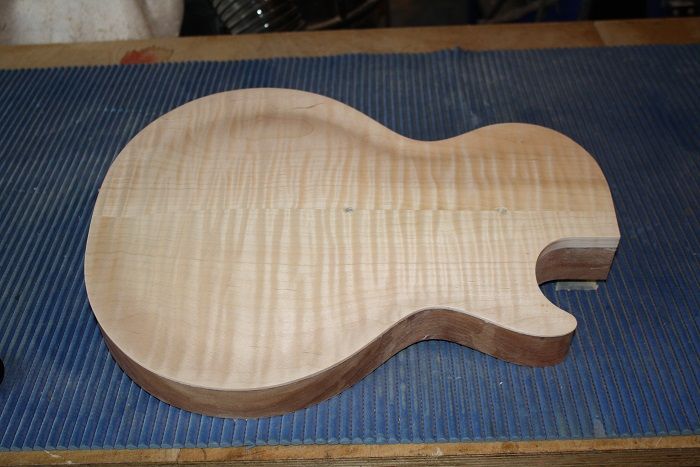
Anyway I've "finished" the first carve. It still needs the neck plane to be done, but I couldn't resist working down to an 800 grit to bring out grain. I started with an oval scraper from StewMac - amazing little tool and I worked it out very quickly:
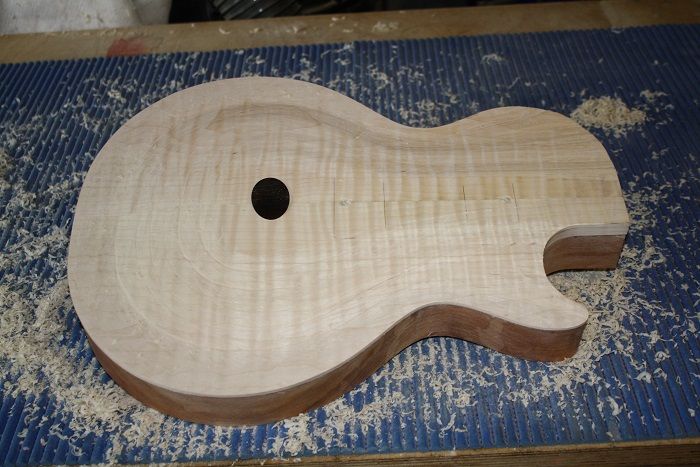
Scraping done:
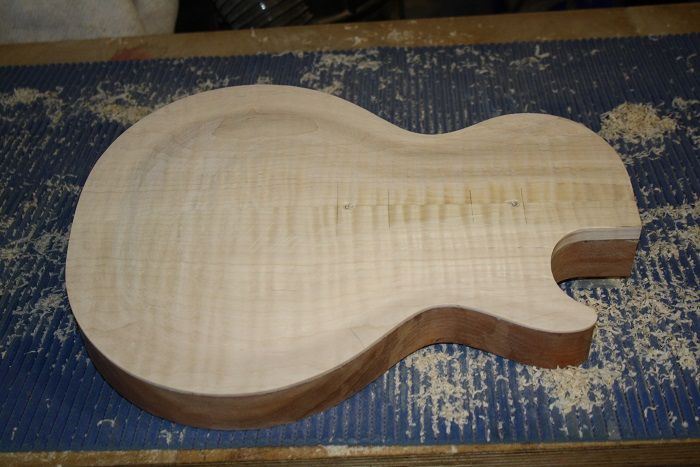
Cleaned up with a sanding mouse:
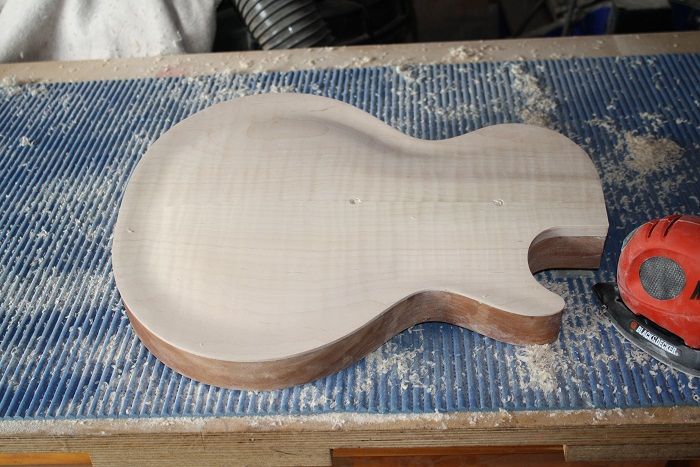
Hand sanding through the finer grains. Done!: