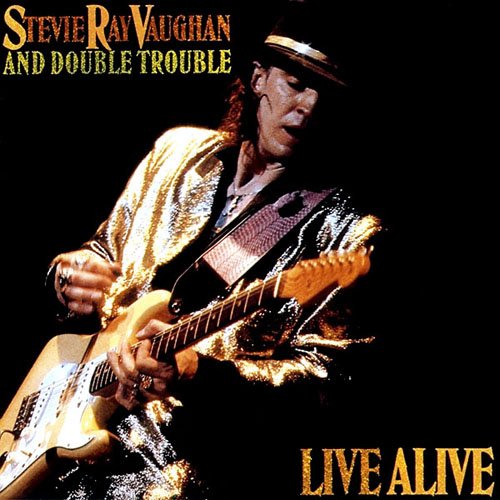
chris77 wrote:
Looking at that Tokai played/owned by SRV.... man, I wonder what would have happened if Fender were as lawsuit-happy back then as Apple is today. It really is quite a blatant copy. Even the font is the same as Fender. ??? Different times back then, for sure.
Fender don't have any Trademarks on their Strat, Tele and P-Bass guitars.
Any guitar manufacturer in the world can legally make copies of the Strat, Tele and P-Bass.
Fender filed for Trademarks, Application Numbers 76516126, 76516127, 76515928.
Then an OPPOSITION against the Trademark Applications was filed to the Trademark Trial and Appeal Board.
Trademark opposition numbers 91161403, 91161404, 91161405.
OPPOSITION filed by...note, Tokai was not part of the opposition.
Stuart Spector designs LTD
U.S Music Corporation
Warmoth Guitar products INC
Indoor Storm LTD
Tradition Guitars INC
Tom Anderson Guitarworks
Schecter Guitar research
JS Technologies INC
W D Music Products INC
Sadowsky Guitars
The ESP Guitar Company
Lakland Musical Instruments
Michael Tobias
Richard Keldsen
Levinson Music Products
James Triggs
Peavey Electronic Corporation
Applicant
Fender Musical Instruments Corporation
(FMIC), seeks registration of the marks shown below for
goods identified in each application as “guitar bodies” in
International Class 15. Each of the applications includes
the following description of the marks, “The mark consists
of a fancifully shaped configuration of the body portion of
a guitar.” The applications are based on use in commerce
under Trademark Act Section 1(a), 15 U.S.C. §1051(a), and
seek registration based on acquired distinctiveness under
Trademark Act Section 2(f), 15 U.S.C. §1052(f).
OPPOSITION
ACQUIRED DISTINCTIVENESS/GENERICNESS
As noted above, opposers have challenged registration
of these proposed marks on the claims that they are generic,
or in the alternative, have not acquired distinctiveness,
given the opposers’ and third-parties’ use of these shapes.
Acquired Distinctiveness
Configurations of products are not inherently
distinctive and may only be registered as marks upon a
showing of acquired distinctiveness.
Opposers have opposed registration of applicant’s marks
on the grounds that they are generic or, in the alternative,
have not acquired distinctiveness in view of the widespread
use of identical and substantially similar configurations by
third parties over several decades.
Applicant filed answers by which it denied the salient
allegations.5 The case is fully briefed and an oral hearing
was held on November 6, 2008.
Each opposer has demonstrated a real interest in
preventing registration of the proposed marks as they are
either competitors (guitar manufacturers and/or sellers) or
retailers of the goods in the applications.
ANALYSIS
Genericness
We first address whether the configurations are so
common in the industry as to be generic and, thus, incapable
of registration. Similar to the circumstances in BellSouth,
supra, this case presents many (seventeen) opposers
testifying to their own use and observation of third-party
uses of identical and substantially similar guitar body
shapes in the United States.
Third-party Uses
As stated above, competitor use of the same or
substantially similar designs is evidence of genericness.
The record shows that, at least from the mid-1970s,
consumers in the United States have been exposed to guitars
in the 126, 928 and 127 shapes emanating from third parties.
Opposers have presented unrebutted testimony that they have
offered for sale identical and substantially similar guitars
in the United States and have seen identical or
substantially similar guitars offered in the United States
Opposition Nos. 91161403 et al.
19
by parties other than applicant since at least the 1970s.
Below is a sampling of the testimony as to each shape.10
127 Body Configuration.
Daniel Lakin, owner of opposer Lakland Musical Instruments LLC, testified as follows:
A. Well, I mean, I saw not just the one – in ’76
I saw not just the Precision Bass that Fender made
but there were companies making the same design.
Ibanez is the company that I remember particularly
because I bought a Jazz bass version of a Fender J
bass version. Ibanez. And they also made a P
bass at the time...There’s also a company named
Univox that made them...Then moving on, it seemed
like everybody was making them. Peavey was
definitely making them. Kramer I believe made a P
bass. Yamaha made a bass that was either – it was
very close to a P bass, I don’t think it had a
pick guard so it looked a little bass...Well, I
saw when I first started playing, and then getting
into it, I’ve seen – it seems like I’ve seen ads
going back all the way to the ‘60s. Just looking
through old magazines and things like that. ‘70s
seems to be when it really started to hit, the
volume of these copies, if you will. Although
there was a company, Tokai, that was known for
making them...
A. Lakland has made and sold a model that is
identical to P Bass body shape since 1999.
Lakin Test. p. 13, Exh. Nos. O-75, 78, 80, 85 (Lakland
advertised its identically shaped bass monthly in the
magazine Bass Player from 1999-2004. Lakin Test. p. 78).
Opposer, Michael Tobias, a guitar manufacturer,
testified that Veneman imported basses with the “P Bass
shape” and he saw them in shops in the mid 70s. Tobias
Test. pp. 39-40. He further testified that Aria, Schecter
and at least “100’s of others” sold “P Bass body shapes” in
the 70s. Tobias Test. pp. 41, 74-75.
Stuart Spector testified that:
A. Dozens and dozens of other manufacturers make
basses in the shape of P Bass, e.g., Cort, Samick,
Sadowsky, Fernandez, ESP, Schecter...
Spector Test. pp. 17-18, see also Exh. Nos. O-2 and O-3.11
Richard Sadowsky, owner of opposer Sadowsky Guitars
Ltd., testified that he first started making basses in the
“P Bass shape” shape in 1982. Sadowsky Test. p. 43, see
also Exh. Nos. O-30, 34 (advertisements in Bass Guitar
magazine and Guitar World magazine). He also testified that
11 Stuart Spector, owner and president of opposer Stuart Spector
Designs Ltd, and former director of research and development for
Kramer Musical Instruments. Applicant, in its statement of
objections, objected to Exh. No. O-2 as lacking in foundation and
not authenticated. The objection is overruled. The testimony of
Mr. Spector provides sufficient foundation for him to
authenticate his own company’s catalogs.
Opposition Nos. 91161403 et al.
21
others, including Schecter, ESP, and DeMarzio make this
shape. Sadowsky Test. p. 44.
A. ...However, I would say that from the early
‘60s onwards and definitely into the mid-60s a lot
of far eastern manufacturers were, as that source
of production became prevalent, utilizing not only
Fender shapes, but Rickenbacker shapes.
Essentially we are using two or three generic
American manufactured shapes.
Moorhouse Test. p. 39, see also pp. 168-171 for
foundation.12
928 Body Configuration
Michael Tobias testified to seeing guitars offered for
sale in the United States with the 928 body shape in the mid
to late 70s made by Aria (Tobias p. 6) and Danny Gratton
(Tobias Test. p. 38). Richard Sadowsky testified that he
has seen third-party 928 shaped guitars at trade shows, in
the press and on television, and that other manufacturers of
this shape include Tokai, Schecter, ESP, and Sadowsky.
Sadowsky Test. p. 76. He testified that Sadowsky first
built a 928 shaped guitar in 1981 and continues to sell 928
shaped guitars. Sadowsky Test. pp. 77-78, see also Exh.
Nos. 4513 (advertisement in 1990 Guitar Player magazine) and
49 (page from Sadowsky product brochure).
Abercrombie
(Sadowsky Test. pp. 90-95).
126 Body Configuration
Michael Tobias testified that in the 1970’s Aria and
Schecter made and sold guitars with the 126 shape. Tobias
Test. pp. 10, 41. Stuart Spector testified that Kramer made
a guitar with the 126 shape. Spector Test. pp. 14-16.
Richard Sadowsky testified that many others besides Sadowsky
made 126 shaped guitars including Hoshino, Tokai, Schecter,
ESP, DeMarzio, and Morris. Sadowsky Test. p. 15.14
Sadowsky has made a guitar in the 126 shape since 1979.
Sadowsky Test. p. 26, see also Exh. O-14 (example of 1986
Sadowsky guitar in 126 shape); Exh. No. O-18 (2002/2003
Guitar World Buyers Guide featuring Sadowsky guitars in 126
shape); Exh. No. 19 (1993/94 brochure of Sadowsky guitars in
126 and 928 style).15 Sadowsky Guitars has displayed its
guitars on its website since 1996. Sadowsky Test. p. 28,
see also Exh. Nos. O-20, 21. Paul Simon purchased a
Sadowsky guitar in the 126 shape in 1983 and Bruce
13 Applicant’s objection to this exhibit on the basis of hearsay
is overruled, we merely consider this exhibit for what it shows
on its face.
14 Applicant’s objection first presented in its appendix that this
information was not produced during discovery is overruled.
15 Applicant’s objections to these exhibits are overruled.
All Three Body Configurations
Michael Tobias testified that many manufacturers were
making guitars in the three shapes. Tobias Test. p. 23-24.
...by the mid ‘70s the Japanese invasion of
instruments was huge and there were lots of brands
making these shapes all for sale and in the same
place at the same time. There were American
builders also being like Schecter who opened
Schecter Shops which we actually participated in
’78 where they would just stock you with these
bodies and necks of almost an exact spec with
their name on them and their whole business was to
assemble parts guitars for people.
Tobias Test. p. 11.
Many manufacturers sold guitar kits with these body
shapes from the mid-70s where the customer assembled the
guitar. Sadowsky Test. pp. 98-105, see also Exh. Nos. O-60
and 62.16
Hartley Peavey, owner of opposer Peavey Electronics
Corporation, testified:
A. They have become traditional shapes over the
last 50 years and these shapes are made by
hundreds, maybe thousands of companies.
Q. And how would you know that?
16 Applicant’s objections to the exhibits are overruled.
Opposition Nos. 91161403 et al.
24
A. Simply because I have been in the industry
longer than anybody else that I know in the
industry....
Q. And you have seen them for sale in the United
States?
A. Yes, I went to my first trade show in 1954.
NAMM17 show, I’m sorry, not trade show.
Peavey pp. 74-75.
Douglas Abrams, owner of opposer IndoorStorm,
testified:
Q. What kind of shapes are indicated on your
website?
A. If you go to our website you would see many,
many shapes of what is called the Stratocaster,
Telecaster and the Precision bass. You would
certainly see on the Stratocaster, if you had been
to IndoorStorm since we started, you would be in
the thousands of different guitars that we posted,
that [126], entitled the Stratocaster, all of the
shapes, virtually identical.
Abrams Test. p. 19.
...based on the data that we have, that there are
about two to three million separate IP addresses
that on a typical year, who hit our website.
Abrams Test. p. 128.
...when I went to the NAMM shows not only have I
seen these generic shapes ... but there are walls
of them...There are brands from Hondo, JB Player.
You could walk into any – within one foot of
walking in, if you just circle, you would see at
least three or four thousand of these generic
shapes.
Abrams Test. pp. 21-22.
ETC, ETC, ETC...it goes on for 75 pages.
The OUTCOME of the OPPOSITION to the Trademark applications.
After a thorough review of this
extensive record, we conclude that applicant has not
established acquired distinctiveness such that these two dimensional
outlines of guitar bodies, standing alone, serve
to indicate source.
Accordingly, based upon consideration of all the
evidence in the record, we find that opposers have made a
prima facie case that applicant’s evidence of acquired
distinctiveness is inadequate and that applicant has failed
to establish that the configurations involved in the
applications before us have acquired distinctiveness within
the meaning of Section 2(f).
Decision:
Each of the consolidated oppositions is
sustained against the application(s) against which they were
brought based on the claim of genericness and in the
alternative that the configurations have not acquired
distinctiveness;
and application Serial Nos. 76516126,
76516127 and 76515928 are refused registration